What is Uechi Ryu Karate?
Uechi Ryu is a traditional Okinawan style of karate with roots in southern China, and it has always been about one thing first: practical self-defense. Powerful striking, circular defense and close-range control are all built for real situations, not for a scoreboard. It's the style taught here at Toma Dojo — practical, disciplined, and built to serve students at any age or fitness level.
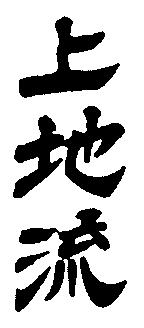
Built for Real-World Self-Defense
Many modern martial arts have drifted toward sport and competition. Uechi Ryu has stayed close to its self-defense roots. Every stance, strike and block was designed around one question: what actually works when someone is trying to hurt you? You don't need to be big, fast or athletic to learn it and be effective.
Close-Range Control
Most real confrontations happen at arm's length or closer. Uechi Ryu trains you to control that space with tight, efficient techniques that don't need room to maneuver.
Block and Strike as One
Circular, "half-soft" blocks deflect an attack and set up the counter in the same motion, so you're defending and ending the threat at the same time.
Low, Practical Kicks
Kicks stay low, aimed at the shin, knee and thigh. They keep you balanced and stable, and they work in everyday clothes and shoes, not just in a uniform on a mat.
Conditioned to Take a Hit
Gradual body-conditioning drills teach your arms, legs and core to handle impact, and give you the confidence of knowing you can.
A Rooted, Stable Base
Sanchin builds a strong foundation, so you're hard to push, grab or knock off balance, and your strikes carry real power.
Effectiveness, Not Points
Techniques are practiced for what works, not for scoring. Training also builds awareness, composure and de-escalation, because the best self-defense is never needing to fight.
Karate training builds real skills, fitness and confidence, but no martial art is a guarantee. That's why we teach awareness and avoidance first, and technique you can trust second.
Where It Comes From
Uechi Ryu traces back to Kanbun Uechi, an Okinawan martial artist born in 1877. As a young man he traveled to the Fuzhou region of China's Fujian province, where he spent roughly a decade studying under a local martial arts and medicine teacher. What he learned there was known as Pangai-noon, or "half-hard, half-soft" — a style built around the movements of the tiger, dragon, and crane.
When Kanbun eventually returned to Okinawa, he began teaching what he had learned. His son, Kanei Uechi, later expanded and formalized the curriculum, and the style came to be known by the family name: Uechi Ryu. It remains one of the most widely practiced Okinawan karate styles today, with students all over the world.
What Makes It Different
True to its "half-hard, half-soft" roots, Uechi Ryu combines direct, powerful strikes with circular blocking and evasive movement, rather than relying purely on hard, linear technique. Training emphasizes open-hand strikes, close-range control, and low kicks, all from upright, stable stances designed for practical self-defense rather than sport scoring. Nothing is flashy, and nothing is wasted: each technique is there because it works.
At the center of it all is Sanchin — the foundational kata every student learns first. It builds stance, breathing, and body structure, and is often described as the root the rest of the style grows from. From there, students progress through a curriculum of eight kata in total, gradually layering on more advanced technique and the style's well-known body-conditioning drills.
“Everything is in Sanchin.” A guiding principle of Uechi Ryu that Sensei Philip emphasizes with every student, since nearly every technique traces back to what's built in this one kata.
Why It Works for All Ages
Uechi Ryu's emphasis on close-range control, grounded stances, and technique over raw speed or size is part of why it suits such a wide range of students — from young kids to adults starting their first martial art.
Easier on the Body
Circular, grounded movement is gentler on joints than styles built around high kicks and jumping — approachable for older or returning students.
Technique Over Size
Close-range control and precise technique matter more than strength or size, so smaller and younger students can still train effectively.
Conditioning That Scales
Body-conditioning practice is introduced gradually and scaled to the student, building resilience over time instead of requiring it up front.
Builds Focus & Discipline
Kata practice sharpens memory, coordination, and self-control — valuable for kids developing discipline and adults looking for a mental challenge too.
Learn Practical Self-Defense
Visitors are always welcome to watch a class — or better yet, try one and see how Uechi Ryu works for yourself.
Schedule Visit